 Image 1 of 5
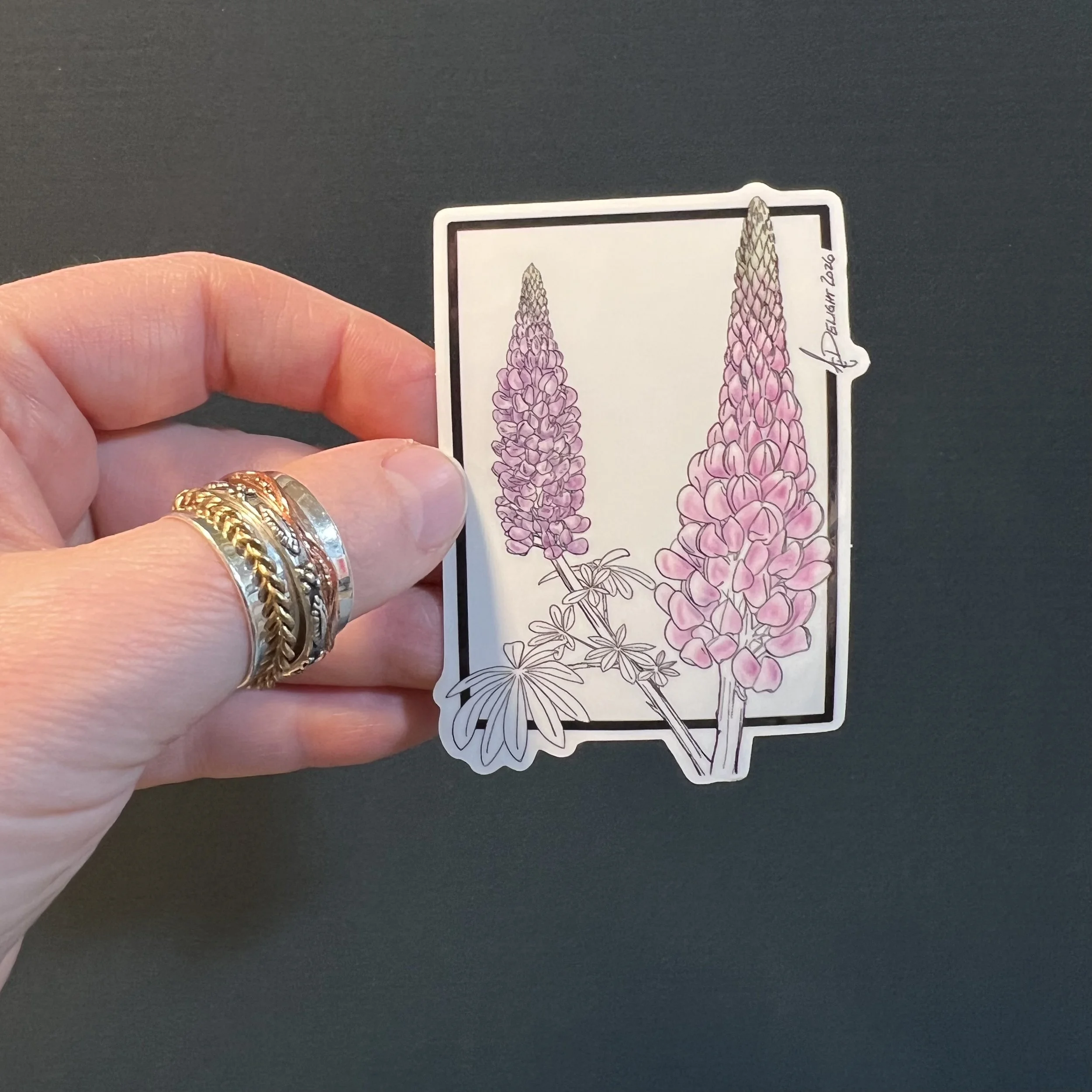 Image 2 of 5
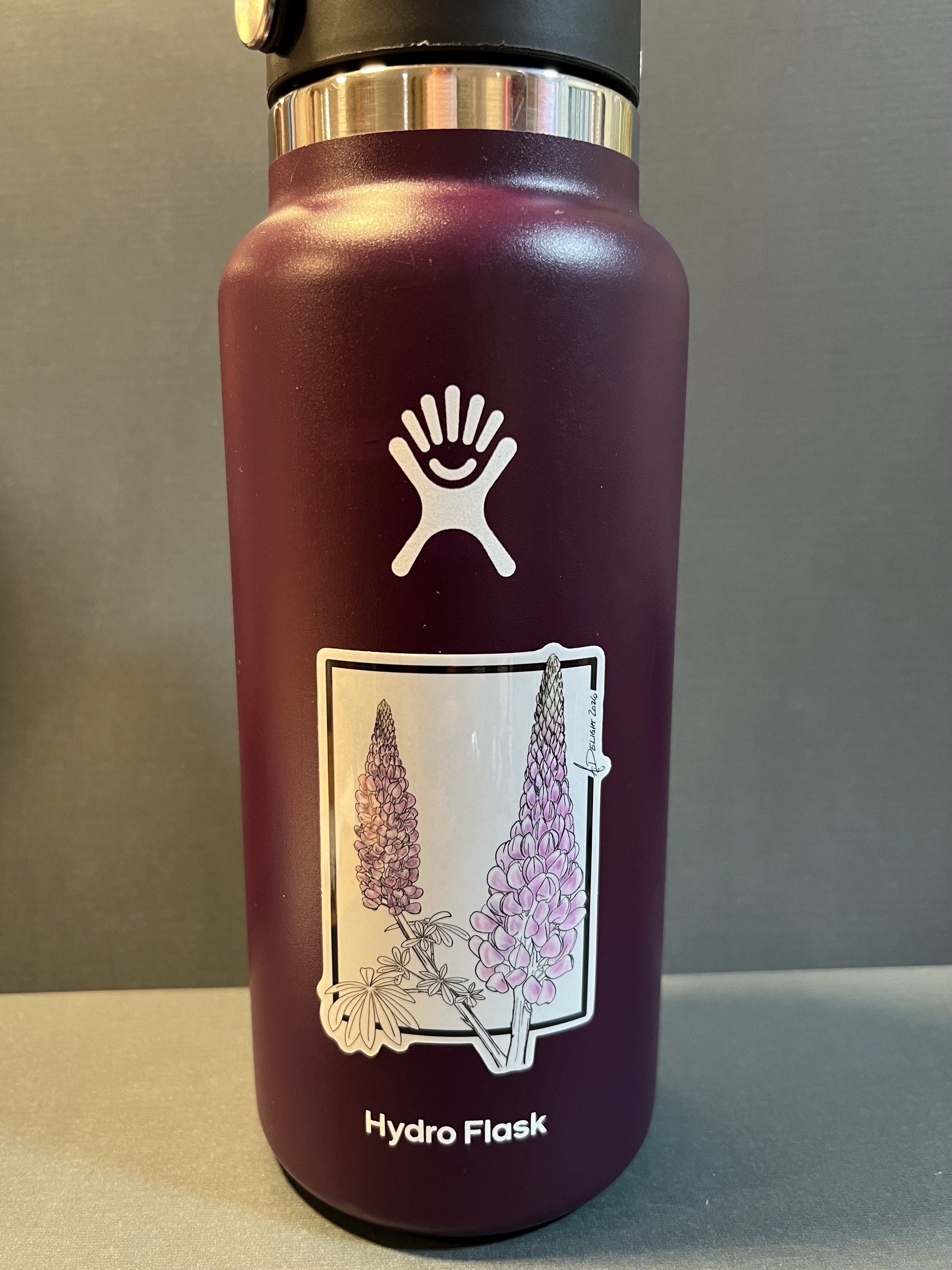 Image 3 of 5
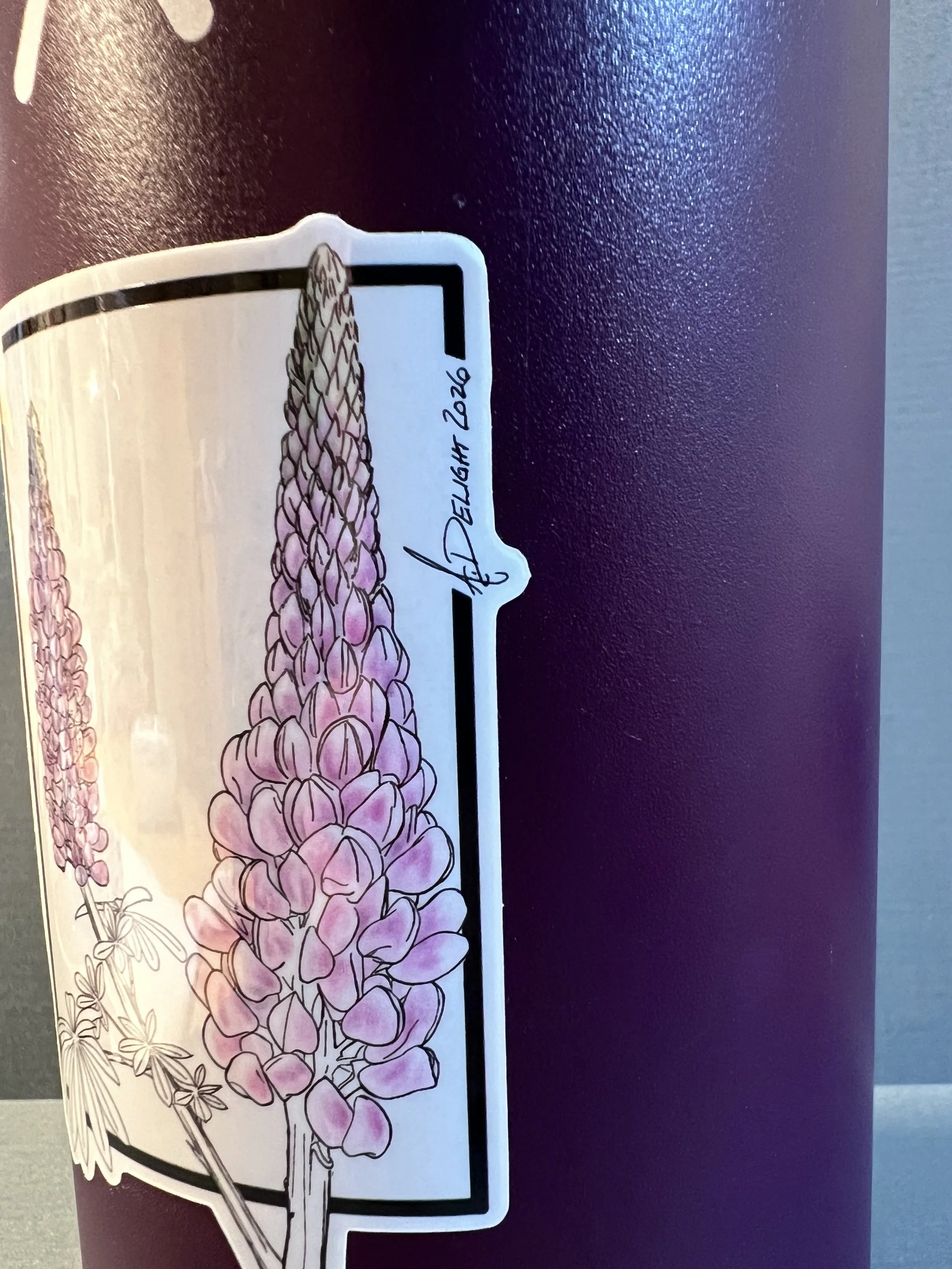 Image 4 of 5
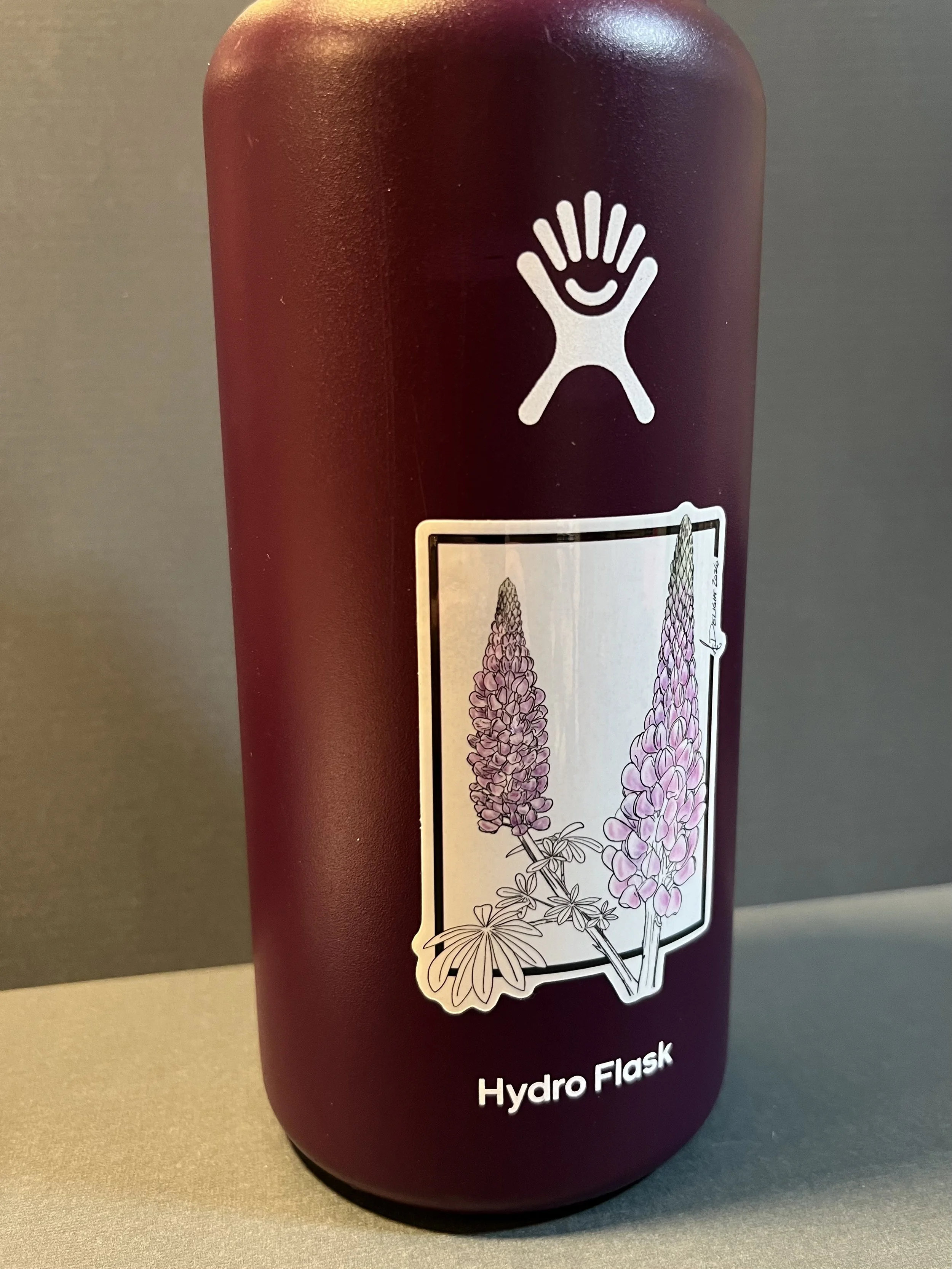 Image 5 of 5
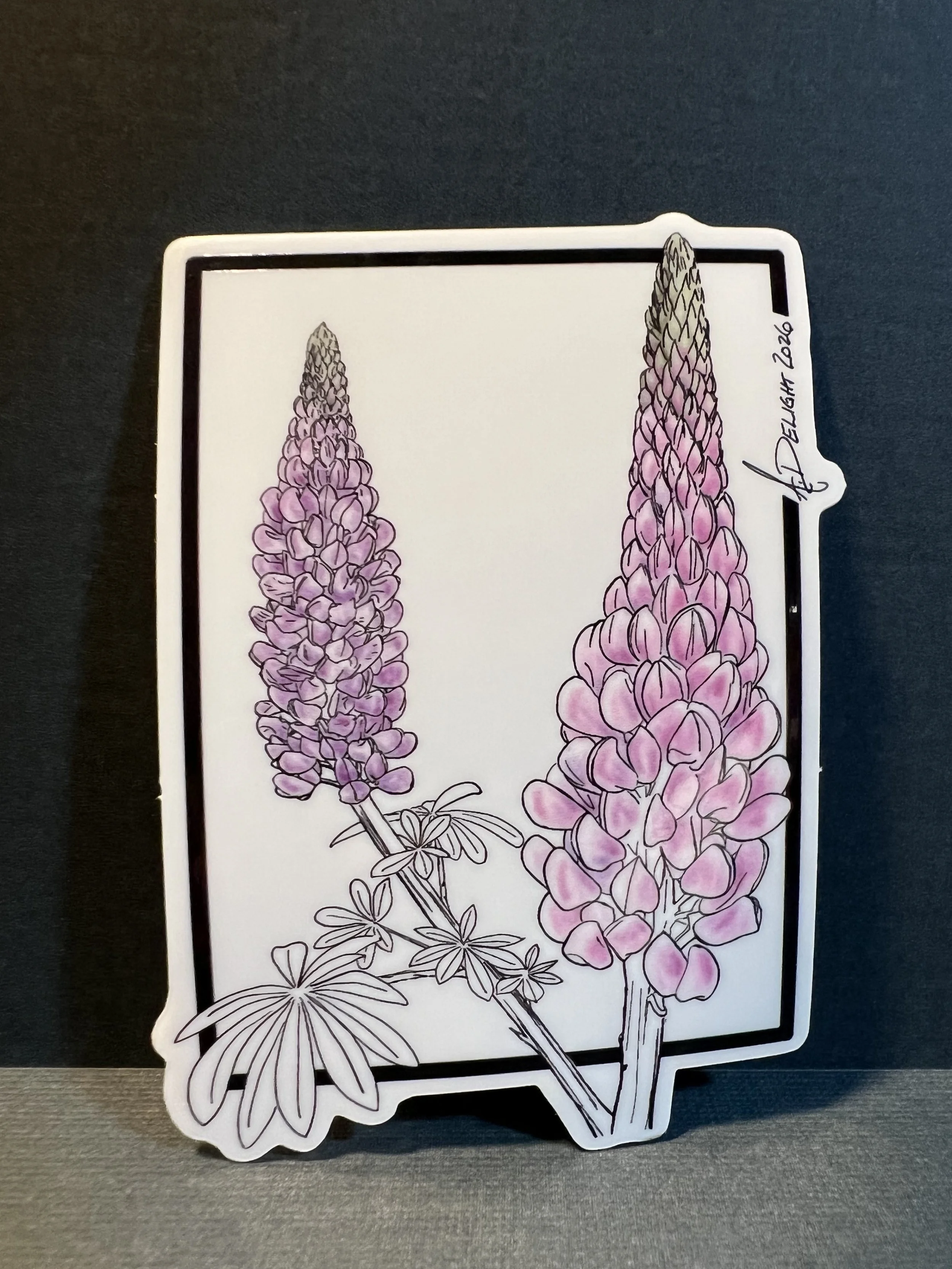
2”x3” Vinyl sticker. Amanda created this image based off of the Lupines that grow right outside of her studio window in Southern Maine. Having lived in both Maine and Alaska, Amanda is drawn to lupines as a quiet thread between the two places. They rise along the roadsides in both landscapes untamed, resilient, and vivid against the wild. Their color feels like a small celebration of survival, and Amanda returns to them often in her work as symbols of movement and memory.
Maine's iconic roadside lupines, famous for their vibrant June blooms, are mostly the non-native Bigleaf Lupine (Lupinus polyphyllus), introduced and spread by people, including the famed "Lupine Lady". While beautiful and vital for pollinators, they are considered potentially invasive as they crowd out the state's rare, native Sundial Lupine (Lupinus perennis), which is shorter, has lighter flowers, fewer leaflets, and prefers dry, sandy soils, serving as a critical host for endangered butterflies like the Karner blue.
When & Where to See Them
Peak Bloom: Mid-June (early to mid-June in the Penobscot Bay/Acadia area).
Where: Roadsides, fields, and open woods throughout Maine, though the massive displays are primarily the non-native variety.
2”x3” Vinyl sticker. Amanda created this image based off of the Lupines that grow right outside of her studio window in Southern Maine. Having lived in both Maine and Alaska, Amanda is drawn to lupines as a quiet thread between the two places. They rise along the roadsides in both landscapes untamed, resilient, and vivid against the wild. Their color feels like a small celebration of survival, and Amanda returns to them often in her work as symbols of movement and memory.
Maine's iconic roadside lupines, famous for their vibrant June blooms, are mostly the non-native Bigleaf Lupine (Lupinus polyphyllus), introduced and spread by people, including the famed "Lupine Lady". While beautiful and vital for pollinators, they are considered potentially invasive as they crowd out the state's rare, native Sundial Lupine (Lupinus perennis), which is shorter, has lighter flowers, fewer leaflets, and prefers dry, sandy soils, serving as a critical host for endangered butterflies like the Karner blue.
When & Where to See Them
Peak Bloom: Mid-June (early to mid-June in the Penobscot Bay/Acadia area).
Where: Roadsides, fields, and open woods throughout Maine, though the massive displays are primarily the non-native variety.